
What to Know About Spinal Cord Injury
What to Know About Spinal Cord Injury
When the spinal cord is damaged or injured, the connection between the brain and body is blocked. It’s like a traffic jam where the messages from the brain can’t get through to direct specific body functions.
A spinal cord injury may cause:
- Loss of movement
- Loss of feeling/sensation
- Loss of bowel and/or bladder control
- Changes in sexual function
- Increased reflexes or involuntary movements and muscle spasms
Diagnosing the Spinal Cord Injury
A spinal cord injury is classified in two ways: complete and incomplete. It’s also based on the level of the spine that is affected.
The universal classification tool for spinal cord injury is the International Standards for Neurological Classification of Spinal Cord Injury (INSCSCI) or ASIA Impairment Scale (AIS).
The assessment tests motor and sensory responses of various muscles at different levels in the body. The ASIA/ INSCSCI assessment determines if the spinal cord injury is complete or incomplete, and it determines the level of injury. Your child will typically be assessed at the acute care hospital before coming to Ranken Jordan. However, sometimes we may reassess your child at Ranken Jordan.
Complete vs. Incomplete Injury
Complete spinal cord injuries occur when the spinal cord is cut, severed, or severely bruised. Your child may not have any movement or sensation at and below the level of injury. Incomplete spinal cord injuries occur when the spinal cord is compressed (squeezed) or injured. Your child may still have some movement and sensation below the level of injury, although it maybe decreased.
Every patient’s injury is different. Please talk with your medical team to learn more about yourchild’s specific injury.
Spinal Cord Injury Levels
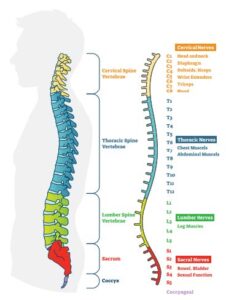
Thoracic Spine (T Level): T1-T12
Lumbar Spine (L Level): L1-5
Sacral Spine (S Level): S1-5
Potential Complications of Spinal Cord Injury
Spinal cord injury carries a risk of developing complications or issues that affect other parts of the body. Every patient is unique and your child may not have the same complications as someone else.
We will work with your child to reduce risks and will monitor your child closely while they’re at Ranken Jordan. It’s also important that you and your child follow our recommendations and let us know any symptoms as soon as possible.
Below are some potential complications to be aware of:
- Neurogenic Bladder Dysfunction A spinal cord injury disrupts communication between the brain and nerves that control bladder function. Depending on the level of spinal cord injury, your child may have an overactive or underactive bladder (peeing too much or too little). This condition is called neurogenic bladder dysfunction. In both types, your child may be unable to tell if their bladder is full. To reduce the chance of having urinary accidents, we will regularly empty their bladder using a flexible tube called a catheter. This also reduces your child’s risk for autonomic dysreflexia (a dangerous condition, see below), skin breakdown, and more frequent infections that can affect your child’s bladder and kidneys.
- Neurogenic Bowel Dysfunction A spinal cord injury can block signals between your child’s brain and spinal cord nerves that control the bowels leading to neurogenic bowel dysfunction. To make it easier to poop, we will give your child medications such as suppositories and stool softeners. Sitting on a toilet or commode is the best physical position to fully empty the bowels. Following a daily schedule of medications and practices reduces your child’s risk of constipation and/or having bowel accidents during the day. Eating good sources of natural fiber such as fruits and vegetables and drinking plenty of liquids can also help prevent constipation.
- Autonomic Dysreflexia (AD) Spinal cord injury can cause a dangerous nervous system overreaction to stimulation called autonomic dysreflexia (AD). Symptoms include a pounding headache, high blood pressure, a flushed face, sweating, a blotchy rash, and nasal stuffiness. Uncontrolled high blood pressure that accompanies AD can lead to a seizure, stroke or even death. The most common causes of AD are full bladder, constipation, infection, and skin injuries. To reduce the risk of AD, it’s critical that your child regularly empties their bowel and bladder. We may need to use a catheter to empty your child’s bladder or a suppository to promote a bowel movement.
- Orthostatic (Postural) Hypotension Orthostatic hypotension is a drop in blood pressure when your child moves to a sitting or standing position that can cause dizziness, light headedness, nausea and changes in vision. To prevent these symptoms, your child should move slowly when changing positions, wear elastic stockings or an abdominal binder, and drink enough fluids.
- Respiratory Infection Respiratory muscles that help your child breathe may be weak after a spinal cord injury. These weak muscles make it difficult to cough effectively enough to clear the lungs of fluid build-up. This can lead to pneumonia and other breathing difficulties. The medical and respiratory team will work closely with your child to keep the lungs as healthy as possible.
- Heterotypic Ossifications This abnormal formation of bone in the tissues that surround the joints may limit the movement of your child’s arms and legs. Heterotypic ossifications most often affect the hips, knees, shoulders and elbows. Stretching and range of motion exercises will help to maintain your child’s joint function.
- Spasticity Spasticity is abnormally high muscle tone and tightness that makes body parts difficult to move. This may lead to joint stiffness, difficulty with mobility, and possibly skin breakdown. Spasticity can be treated with medication if it interferes with positioning, wearing braces or clothing, causes your child pain, or impacts function. Stretching and bracing may also be needed to treat spasticity.
- Edema When fluid collects in the tissues, it causes swelling called edema. Swelling can be prevented by repositioning, range of motion exercises, wearing support stockings, and elevating your child’s legs and feet above heart level while lying down.
- Deep Vein Thrombosis Deep vein thrombosis (DVT) is a blood clot that may develop in the body’s large, deep veins due to decreased activity and blood flow. They usually occur in the thighs or calf but also can happen in the arm or stomach. Signs of a blood clot include swelling, redness and warmth over the specific area, throbbing pain in the affected area (although people with spinal cord injuries may not feel pain or may interpret it differently), fever, and increased spasticity. If you suspect a DVT, do NOT massage the affected leg or area. Your child will likely need an ultrasound to confirm the presenceof a clot. If your child has a blood clot, they may need to take a blood-thinner medication.
- Pulmonary Embolism DVTs can be dangerous because they can travel to the lungs. This is called a pulmonary embolism and can interfere with blood flow in the lungs and can cause severe breathing problems. A pulmonary embolism can be life-threatening. Your child needs medical attention immediately if they experience unexplained shortness of breath, chest pain or fainting.
- Temperature Regulation Difficulty The “thermostat” that controls body temperature is located inside your child’s brain. After a spinal cord injury, the signals between the brain and body are interrupted so your child’s body has difficulty adapting to the environmental temperatures. This means your child’s body can’t cool or warm itself as it did before the injury. If the environment is hot, the body becomes too hot. If the environment is cold, the body becomes too cold. It’s important for your child to avoid being in extreme temperatures after a spinal cord injury.
- Pressure Ulcers A pressure ulcer is any redness or break in the skin caused by too much pressure over a bony area. This can happen if your child sits or lays in one position for too long. Pressure relief techniques are one way to prevent skin breakdown from the beginning. We will teach you and your child these techniques at Ranken Jordan that you can continue at home.
“I still think about how Ranken Jordan changed my life.”
— Kiland Sampa, Inpatient Jul-Nov 2013, Outpatient Dec 2013-Dec 2014