
Preparing the Home
Preparing the Home
When you bring your child home, you may need to change some things to make it easier for your child to move around and access areas of your home. Making your home as accessible as possible will help your child learn to live more independently and feel more confident and comfortable with their new physical abilities.
From the time you arrive at Ranken Jordan, we start planning with you what you will need to get home. We encourage you not to start making home modifications or purchasing extra equipment until you have talked with your primary therapists about your unique expected needs. Your therapists will give you guidelines and recommendations specific to your family.
To begin making these recommendations, the first step is to assess your current home environment.
Front entry
Garage
Sidewalks
Driveway
Interior doorways
Bathroom
Bedroom
Kitchen
The more pictures/videos the better!
Being able to get your child inside your home is one of the first accessibility needs to think about while your child is still in the hospital. It should be addressed as soon as possible because if you’re unable to get your child inside your home, it can hold up your child’s discharge.
Before adding a ramp, think about all the entrances to your home. There are many factors to consider: How many stairs up to the doorway? How close is the door to where you park your car? If you entered that door, are there any inside stairs to get to your bedroom and bathroom? You only need to be able to get in one entrance to meet this requirement for discharge.
When your child is evaluated for medical equipment they will need when they go home, the wheelchair vendor can tell you the width of the chair that’s being ordered. Measure important doorways around your house, such as the outside doorway you will use and doorways into rooms your child will need to go into (kitchen, bedroom, bathroom). You should also measure hallways, bed heights and take bathroom measurements.
In other rooms, think about moving furniture and rugs to make clear, wide paths for your child’s wheelchair.
Therapy Equipment Needs at Home (Durable Medical)
Below are some of the most common equipment needs of patients with spinal cord injuries:
Wheelchair: A wide variety of wheelchairs can assist in improving your child’s independence. Your physical and occupational therapists will partner with you and your care team to determine what type of chair will best fit your child’s needs.
The wheelchair (and other potential equipment) will be ordered through a Durable Medical Equipment (DME) company. There are many DME companies to choose from. The Ranken Jordan team can help determine which company works with your insurance.
Wheelchair cushion: Having the right wheelchair cushion is important for pressure relief and good transfers to prevent pressure sores and provide overall comfort and positioning.
Stander: A stander helps your child maintain a standing position to improve circulation and bone density. Your physical therapist will determine if this is something your child will need in the home.
Shower and toileting chairs: These chairs are typically used to complete bowel programs and for bathing. With many options for shower and toileting chairs, your therapist will help determine the best option for your child based on their needs and the home’s space.
A variety of other potential equipment could be useful in maximizing your child’s independence. Your child’s care team will explore the need for a hospital bed, mechanical lift and slings, sliding board, FES bike, and adapted trikes.
Equipment Evaluation Process
Durable Medical Equipment Vendors
NuMotion: Wheelchair & Mobility Equipment Company | (Numotion.com)
Alliance Rehab Medical: Alliance Rehab and Medical Equipment (alliancerehabmed.com)
National Seating & Mobility: NSM — National Seating & Mobility (nsm-seating.com)
Assistive Technology
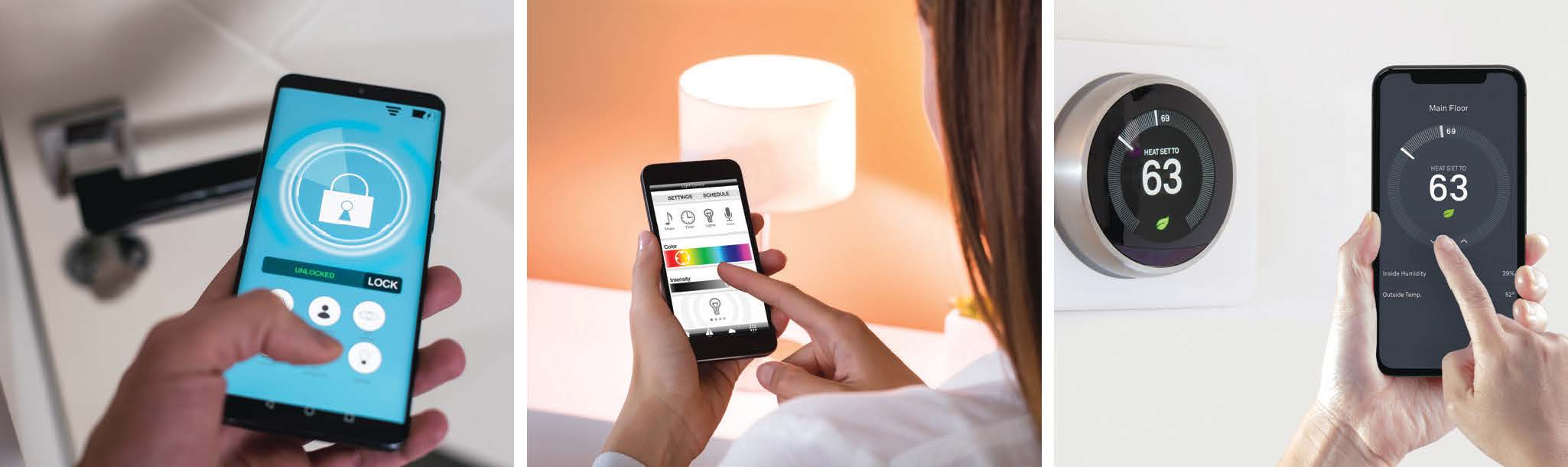
Bluetooth-enabled home devices: Door locks, lights, light switches, thermostats, outlets, doorbells, security systems, call lights, vacuums, appliances
Alexa/Echo: Gives your child the ability to get automated answers to everyday questions such as “What’s the weather?”; “What time is my doctor’s appointment on my calendar?” With the appropriate device connected, your child can use verbal commands to complete household tasks such as “Turn lights on in the bedroom”; “Lock the front door.”
Smart Hubs: Connects and controls all smart devices through one hub and/or one app on your phone/tablet. For instance, Samsung’s SmartThings app can notify you when caregivers come and go, turn on outdoor lights when you pull in the driveway, unlock the front door as you approach, adjust the thermostat when you get out of the shower, etc.
If This, Then That: Integrates apps, devices and services and automates commands for smart devices. For instance, you can set the lights in your bedroom to turn on at certain times or unlock the front door if a certain caregiver calls, etc. Options can be customized to your lifestyle and needs.
Transportation
Your child’s therapists will work with you on transportation and car transfers. Please discuss transportation and vehicle transfers with your therapists prior to making any modifications or vehicle purchases. If it’s possible for your child to transfer into a standard car, it will be important to have your personal vehicle available for practice. Some makes and models of cars allow for a successful transfer to and from a wheelchair while others are not feasible options for a safe transfer.
If a wheelchair-accessible vehicle is needed, your therapy and social work team can talk with you about public transportation, rental and vehicle purchasing options.
Transitioning Back to School
Many patients and families feel unsure about returning to school after a spinal cord injury, but school can be a great support to students returning home. Schools can offer therapies such as physical, occupational, and speech therapies, nursing support, accessible transportation, along with many other accommodations to assist you with a successful return to learning and socialization.
Before the school can meet your child’s new needs, they will need to complete an evaluation for special services, which will determine the best way to support your child in the education setting. The evaluation will lead to the writing of an Individual Education Plan (IEP) or a 504 Plan. Both are formal documents that address the types of support the school will need to provide for your child.
Our education liaison serves as the link between our medical team, your child and the school to help families navigate next steps and ensure a smoother transition back to school. We provide the school with information about your child’s diagnosis to help your child obtain the appropriate educational support, services and resources.
At Ranken Jordan, our education liaisons break down barriers and help you understand the accommodations that can be made by the school so your child can attend or receive services they need to continue their important education. One of the education liaisons will meet with you and your child to explain this process to determine the necessary accommodations for your child in more detail and provide informational materials as needed. The education liaison works as an advocate for you to help assure your child receives the most appropriate IEP or 504 Plan.
Our education liaison can work with your school district’s Special Education Department to discuss your child’s rights and the accommodations you need. The accommodations and the steps to arrange them may differ from school to school.
By partnering with education liaisons, parents feel more confident about their ability to work with the school and to help their child.
Partner with Child Life Specialists
- Provide resources for school transition, such as education for teachers and classmates to empower your child as they return to the classroom and reduce teasing.
- Create a patient “All About Me” resource to assist teacher and classmates with helpful information on how to best support your child in the school environment.
- Help address and explain any cognitive, behavioral, or physical changes, due to injury.
“I still think about how Ranken Jordan changed my life.”
— Kiland Sampa, Inpatient Jul-Nov 2013, Outpatient Dec 2013-Dec 2014